

Equestrian Physical Therapy
Physical Therapy for Equestrian Athletes
Riding is a sport. Your body deserves to be treated like it. Champion PT brings evidence-based, rider-specific physical therapy directly to your barn — from a therapist who has been in the saddle.
The Clinician's Perspective
A Therapist Who Has Been in the Saddle
Dr. Glen "Rusty" Farmer II grew up riding English in Germany, developing a firsthand understanding of what the sport demands — the hours in the saddle, the barn work, the repetitive loading, and the quiet resilience riders carry into every session. That experience didn't stay in the past.
When Dr. Farmer pursued his Doctorate of Physical Therapy, he brought that rider's perspective with him. He understood why riders minimize pain, why they push through asymmetry, and why a generic rehab program built for a runner or a weightlifter simply doesn't translate to someone whose sport requires independent seat, soft hands, and a stable core at the posting trot.
Returning to the equestrian world through the lens of a physical therapist, he built Champion PT around a simple conviction: riders deserve a clinician who understands their sport from the inside — not just from a textbook.
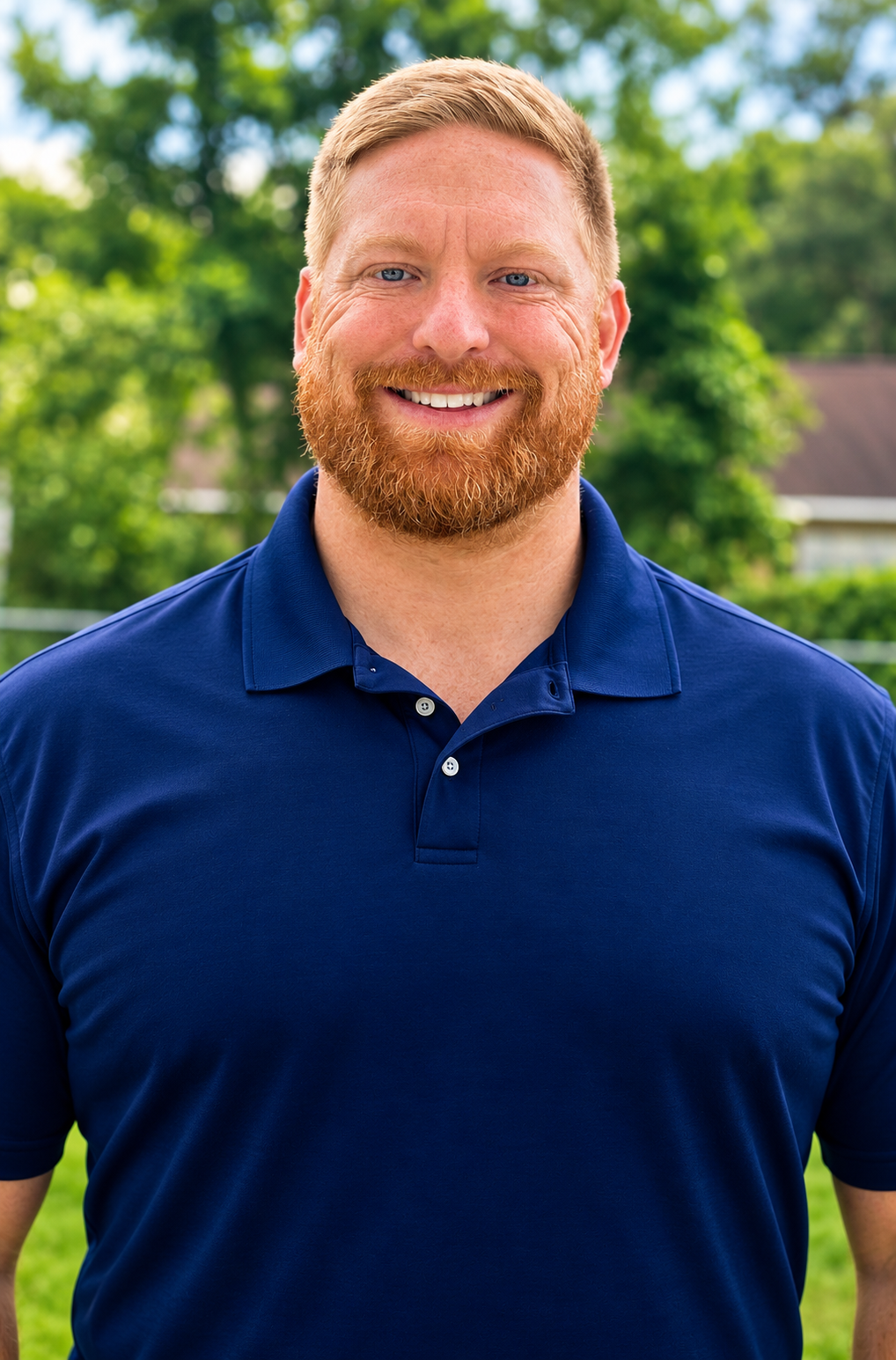
Dr. Glen “Rusty” Farmer II, PT, DPT
English rider • Multi-sport athlete • Doctor of Physical Therapy
Understanding the Sport
What Riding Actually Demands of Your Body
Equestrian sport is one of the most physically demanding athletic pursuits — and one of the most misunderstood. The rider's body is in constant motion, absorbing and redirecting force, stabilizing against asymmetry, and communicating with a 1,200-pound partner. Add barn work, and the cumulative load on the spine, hips, and shoulders is significant.
Spinal Stability and Mobility
The posting trot, sitting trot, and canter all require rhythmic spinal extension and rotation. Stiffness or instability in the thoracic spine and lumbar region directly affects your ability to follow your horse's movement — and loads the discs and facet joints with every stride.
Hip Mobility and Symmetry
A deep, independent seat depends on hip flexor length, adductor flexibility, and hip rotator strength. Asymmetry in hip mobility — common in riders who favor one diagonal or one lead — creates compensatory patterns that show up as crookedness in the saddle and pain on the ground.
Core Stability Under Load
Effective riding requires a stable, responsive core — not just strength, but the ability to stabilize dynamically while your limbs move independently. Weakness here forces the rider to grip with the thigh, brace with the back, or rely on the reins for balance.
Shoulder and Rotator Cuff Function
Soft, following hands require a stable shoulder girdle. Rotator cuff weakness or impingement leads to stiff, bracing arms — which the horse feels immediately. Barn work compounds this: mucking stalls, carrying hay, and lifting water buckets are overhead and loaded tasks performed repeatedly.
Sacroiliac and Pelvic Mechanics
The SI joint is the rider's shock absorber. Dysfunction here — often presenting as one-sided low back pain, hip clicking, or difficulty sitting the canter — is among the most common complaints we see and one of the most responsive to targeted manual therapy and movement retraining.
Knee and Ankle Loading
Long stirrups, deep heels, and the sustained isometric demand of the leg position place significant stress on the knee and ankle. Patellofemoral pain, IT band syndrome, and Achilles tendinopathy are all common in riders — and all addressable with the right program.

Clinical Scope
Rider-Relevant Conditions We Treat
- Low back pain and lumbar disc issues
- Sacroiliac joint dysfunction
- Hip flexor tightness and hip impingement (FAI)
- Adductor and groin strains
- Patellofemoral pain and IT band syndrome
- Rotator cuff tendinopathy and impingement
- Thoracic stiffness and postural dysfunction
- Cervical pain from sustained head position
- Rider asymmetry and crookedness
- Post-fall injury rehabilitation
- Return to riding after surgery
- Repetitive strain from barn work
Rider Mobility and Performance
What Better Movement Looks Like in the Saddle
Physical therapy for riders isn't just about resolving pain — it's about improving the quality of your position, your communication with your horse, and your longevity in the sport. Here's what targeted mobility and strength work can change.
A More Independent Seat
When your hips move freely and your core stabilizes without gripping, your seat becomes quieter and more effective. Your horse responds to subtler aids — and your position stops being a source of interference.
Symmetry You Can Feel
Most riders have a stronger or more mobile side. Addressing those asymmetries with targeted exercise doesn't just reduce injury risk — it makes you a more balanced, accurate rider. Your trainer will notice before you do.
Softer Hands, Stable Shoulders
Shoulder mobility and rotator cuff strength directly affect the quality of your contact. When the shoulder girdle is stable and mobile, the elbow can follow and the hand can soften — without the arm bracing against the horse's mouth.
Riding Longer, Recovering Faster
The riders who stay in the sport longest are the ones who treat their bodies like athletes. A proactive approach to mobility, load management, and injury prevention keeps you in the saddle through the seasons that matter most.

How It Works
Rider Consultation to Return to Sport
Rider-Specific Evaluation
A full movement screen and sport-specific assessment at your barn or facility. We evaluate your posture, hip mobility, spinal mechanics, shoulder function, and any current symptoms — in the environment where you actually ride.
Diagnosis and Plan
You'll leave the first session with a clear diagnosis, an understanding of what's driving your symptoms, and a treatment plan built around your riding goals and competitive timeline.
Hands-On Treatment
Manual therapy, dry needling when indicated, and targeted exercise — all calibrated to the demands of your discipline. We work around your training schedule, not against it.
Return to Full Performance
The goal isn't just pain-free — it's riding better than before. We progress your program through return-to-riding milestones and keep you in the saddle as much as safely possible throughout recovery.
We come to your barn — serving Ocala, Marion County, and surrounding Central Florida communities.
Ready to Ride Without Limits?
Whether you're managing chronic pain, recovering from a fall, or simply want to move better in the saddle — we'd love to work with you. Consultations come to your barn.